
For the past three years, it has been our habit to gather on Maundy Thursday to read and to listen to Dante’s Divine Comedy. In 2023 we read the Inferno in full, in a Meetinghouse glowing red from the flames of hell. In 2024 we read the Purgatorio in full, this time in a Meetinghouse lit up in green, to signify the emergence of new growth. Finally, in 2025, we read the Paradiso in full, now in a Meetinghouse bathed in blue, to signify the heavens above. Miraculously, many of you got excited about the project, and signed up to be readers each year. And not a few of you showed up to listen to portions of the poem, which lasted every year until nearly 1 AM. For my part, I thought it was glorious, and it is not an exaggeration to say that Dante nurtured something profound within me. The poem has become an essential component of my spiritual life, and I shall return to it for as long as I live.
But it is time for something new. And so this year, rather than circling back around to the Inferno (which I had originally thought to do), I began to toy with the idea of grappling with another epic poem, one that has had an equally powerful impact on people of faith across the centuries.
Yes, friends, it is time for a reading of Milton’s Paradise Lost!
Why Milton, and why now? If Dante’s Divine Comedy is the creative culmination of the medieval world prior to the Renaissance and the Reformation, Milton’s poem is an outgrowth of the Reformation. In fact, it is the Protestant poem, par excellence. It was published in 1667, only two years after what is now Old Lyme was settled as a community, and only one year after our first minister, Moses Noyes, arrived in town. It is a poem that has shaped the world of Congregationalists for generations, in ways we scarcely recognize. But it has also shaped the thoughts of readers as diverse as Thomas Jefferson and Malcolm X, George Eliot and C.L.R. James. Its reach is vast, but its roots are roots we share in common.
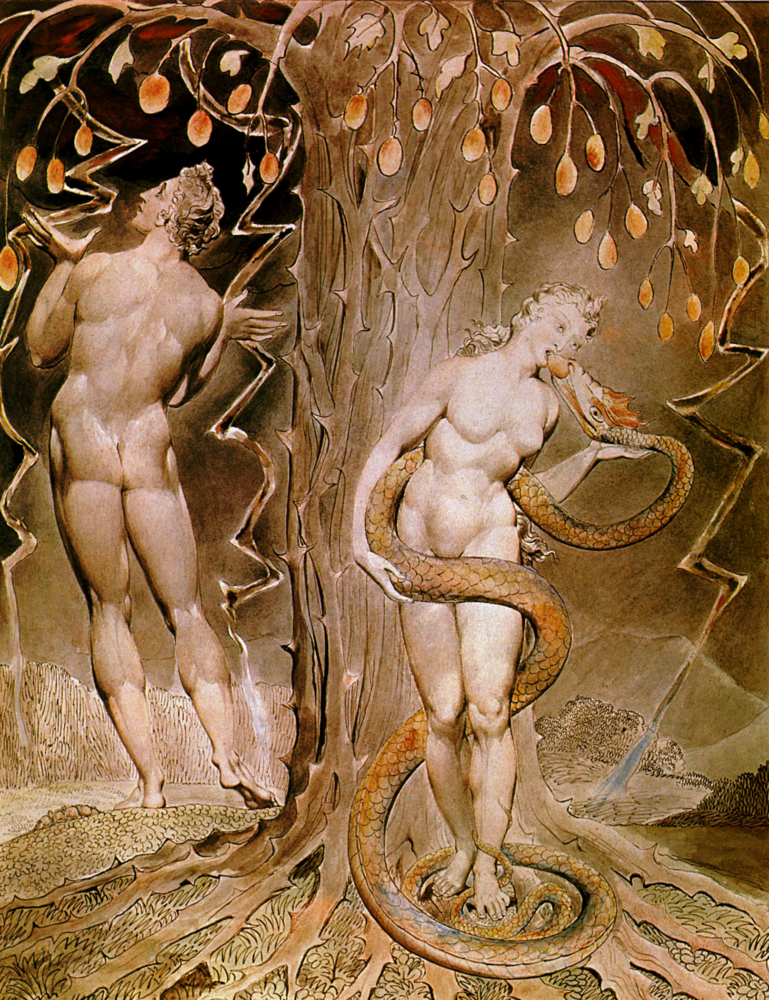
But another reason is the backstory: Milton had taken part in a revolt against the monarchy in his time, in an effort to move England toward a fledgling form of democracy. That effort failed, and so Milton wrote his massive poem about the rebellion in heaven, of the fall, and of the consequences of free will. In other words, Milton was grappling with some of the same issues that are emerging once again in our own time, though in a different form. This is a poem that we need right now, for all of its theological, moral, and aesthetic complexity.
Did I also mention that it’s fun to read?
Here’s how we’ll do it. Paradise Lost is divided into 12 books, or long chapters. Reading four of those books/chapters out loud will take about as long as it took to read each of the three parts of The Divine Comedy. We’ll cover the first four of those books this year, on Maundy Thursday (April 2). In 2027, we’ll cover books 5-8. And in 2028, we’ll read books 9-12, ending our sequence.
And I’ve done the math. If we have 33 or 34 readers, as we did with Dante, each reader can take approximately 117 lines of the poem, which will take 8-10 minutes to read. We’ll take breaks between books to stretch our legs, and to get snacks and coffee.
This is going to work!
Instead of reading it deep into the night, we’re going to read it throughout the day of April 2nd. We’ll start promptly at 10 AM. We should finish by 5 or 6 PM. Throughout, we hope to have selections of music sung from Haydn’s Creation, much of which was inspired by Paradise Lost. Then, when we’re finished, we’ll gather for a simple dinner of soup and bread, followed by the sharing of communion.
Sign up for readers will start on Sunday, March 15th after the 10:00 am service. But if you wanted to start preparing, you could do worse than to pick up a copy of the poem, joined by a reading of Orlando Reade’s newish book, What In Me Is Dark: The Revolutionary Afterlife of Paradise Lost. It’s a lively and informative guide.
I hope you’ll consider being a part of this spiritual and literary journey throughout Lent, but especially during Holy Week. It promises to be a powerful and orienting experience.
Rev. Dr. Steven Jungkeit